
Retro Café
Where Time Slows and Stories Begin
A Café for the Dreamers and the Drifters.
Translating the warmth, character, and quiet rhythm of Retro Café into a timeless visual identity designed to make every visit feel personal.
CLIENT
Retro Café
SECTOR
Specialty Coffee & Hospitality
YEAR
2024
SERVICES
- Logo Design
- Visual Identity
- Brand Guidelines
THE CHALLENGE
Retro Café already had a distinctive atmosphere shaped by warm interiors, natural materials, thoughtful details, and an unhurried experience. What it lacked was a recognizable visual language capable of expressing that character consistently.
THE SOLUTION
We designed a logo and visual identity inspired by the familiar warmth of the past, interpreted through a simple and contemporary system. Deep green, tactile materials, understated typography, and gentle compositions created an identity that feels nostalgic without becoming dated.
THE IMPACT
A cohesive and memorable brand presence that connects the café’s atmosphere with every customer touchpoint, from the cup in their hand to the space, packaging, communication, and digital experience.
THE PLACE
A Café Made for Slower Moments
Some cafés are designed around speed.
Retro Café was designed around the opposite.
It is a place to pause between appointments, return to an unfinished conversation, read without watching the time, or simply sit with a cup of coffee and let the day move more slowly.
Its character could already be felt through the furniture, lighting, materials, colors, and quiet details within the space.
The atmosphere was warm and familiar. It carried traces of the past without trying to recreate a particular decade. It felt personal, comfortable, and gently removed from the noise outside.
The identity needed to capture this feeling and give it a recognizable visual presence.
Retro Café had a clear soul, but its visual expression did not yet communicate the full character of the experience.
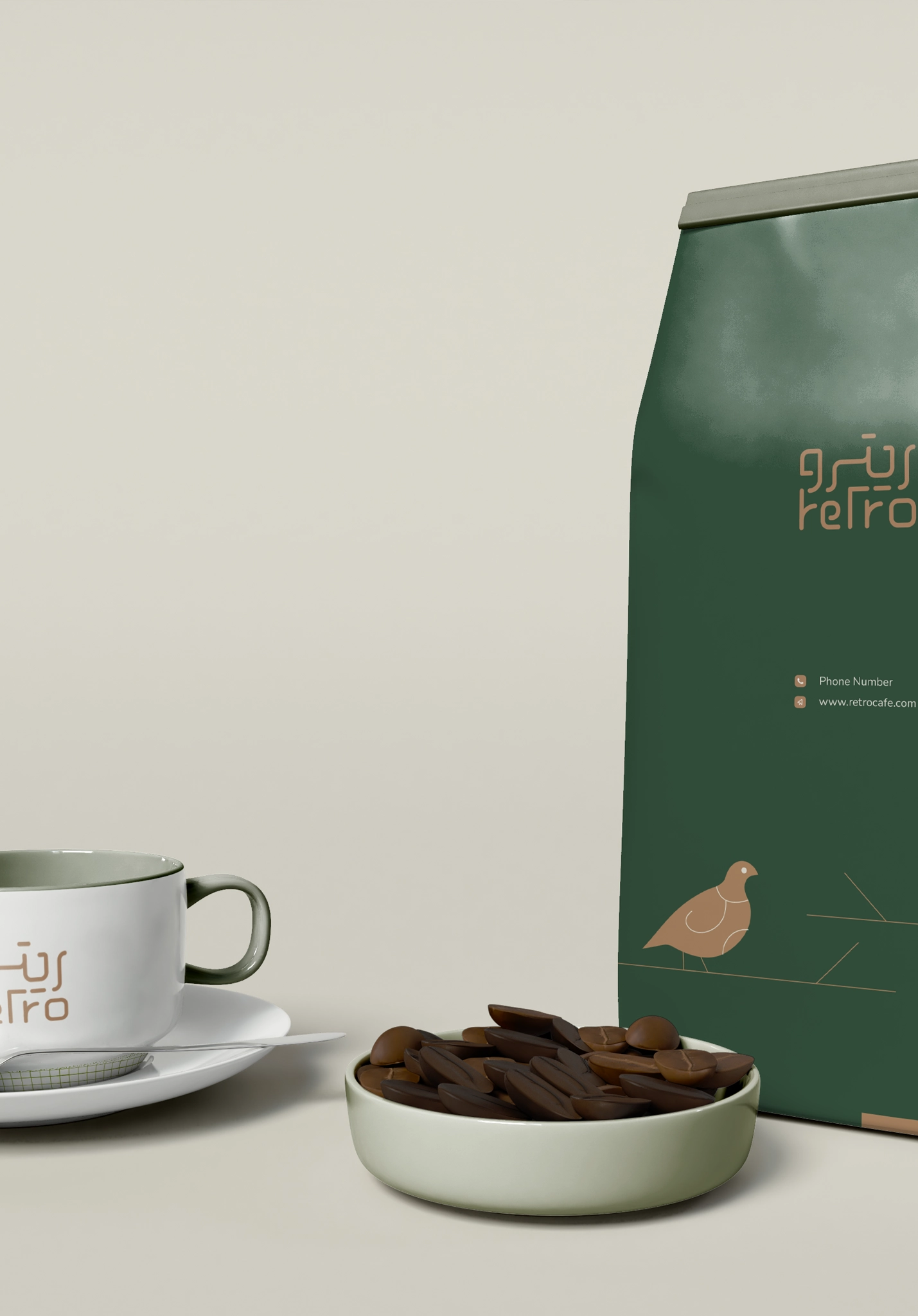
The identity needed to feel connected to the space without depending entirely on its interior design. It had to remain recognizable on a takeaway cup, coffee bag, menu, uniform, social post, or small digital screen.
The word “retro” also introduced an important creative challenge.
A literal interpretation could easily become theatrical, overly nostalgic, or tied to temporary visual trends. It could make the café feel like a recreation of the past rather than a living place with a character of its own.
Not an escape from the present.
A place to experience it more slowly.
THE DESIGN DIRECTION
Warmth, Simplicity, and Soul
Three qualities guided the development of the identity.
WARMTH
A visual language that feels welcoming, comfortable, and human—reflecting the experience of spending time in the café.
SIMPLICITY
A clear and understated system that allows the coffee, space, and customer moments to remain at the center of the brand.
SOUL
Small imperfections, tactile details, natural materials, and thoughtful compositions that give the identity character without making it feel manufactured.
Together, these qualities created a direction that is quiet but distinctive.
The identity does not demand attention through visual noise. It builds recognition through color, restraint, consistency, and details that reveal themselves over time.
Warm enough to feel familiar.
Simple enough to remain timeless.
THE LOGO
A Signature with Familiar Warmth
The Retro Café logo was designed to become a quiet and confident signature for the brand.
Its character balances familiarity with clarity. It carries enough personality to reflect the café’s distinctive atmosphere while remaining simple enough to work across a wide range of formats and materials.
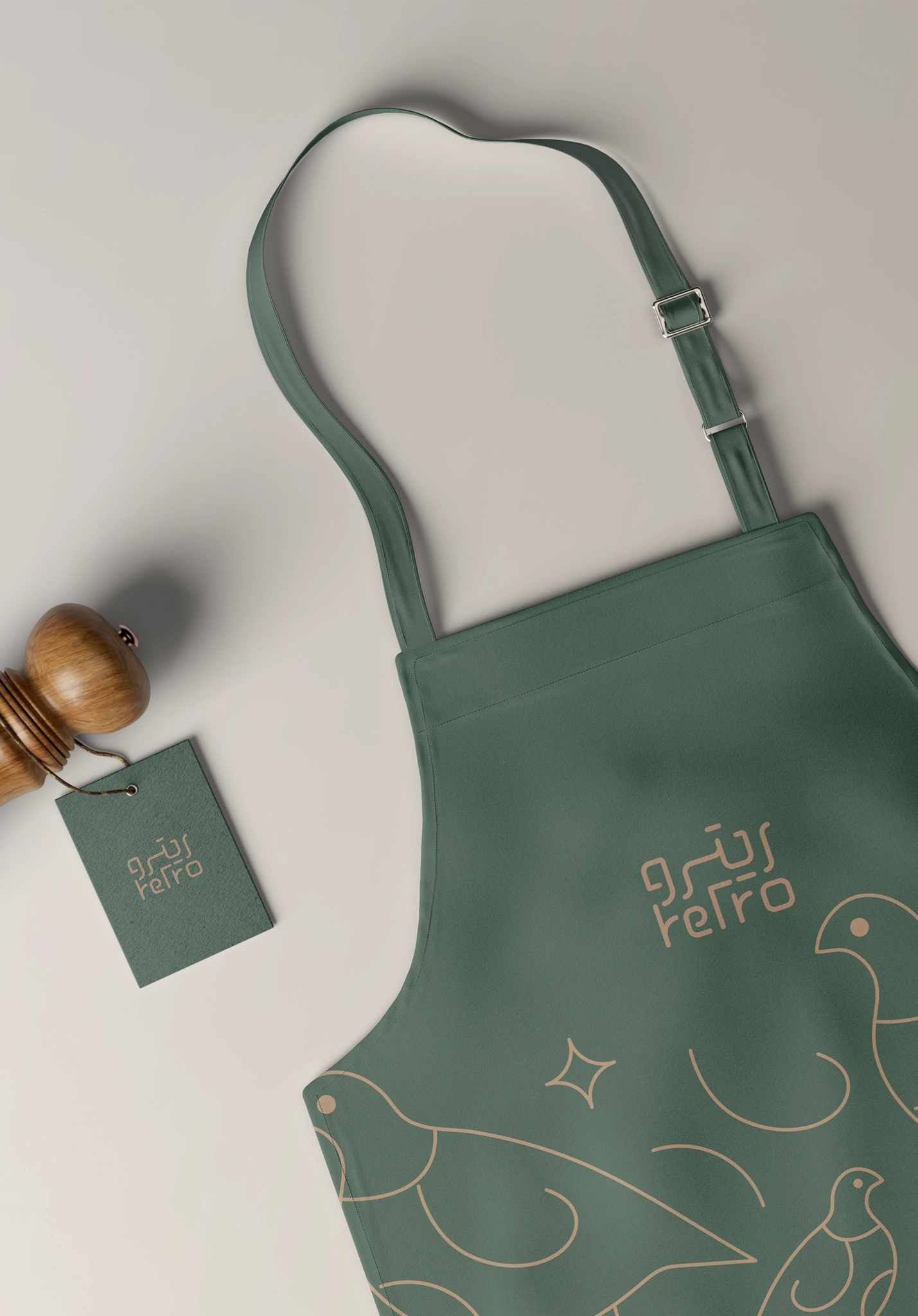
The logo was developed to feel natural on the surfaces that form part of the café experience: cups, menus, aprons, coffee packaging, signs, stationery, and digital platforms.
Rather than relying on decorative vintage effects, its construction creates a more lasting expression—one that can live comfortably alongside both handcrafted materials and contemporary applications.
The result is a mark that feels as though it has always belonged to the café.
A familiar presence.
Drawn for a brand moving forward.
THE VISUAL IDEA
Designing a Feeling, Not a Trend
The identity was built around the emotional qualities associated with meaningful places.
A favorite chair shaped by years of use. A handwritten note inside a book. The texture of natural paper. Light entering through a window in the late afternoon. A cup placed beside an unfinished conversation.
These references helped us create a visual world that feels lived in rather than staged.
The system avoids exaggerated nostalgia and trend-driven interpretations of retro culture. Instead, it draws from the qualities that give older objects and spaces their lasting appeal: authenticity, simplicity, craftsmanship, and emotional value.
This makes the identity relevant today while allowing it to age naturally with the café.
Retro is not a decade.
It is a feeling that time has left behind.

THE COLOR PALETTE AND TYPOGRAPHY
A Green That Holds the Story Together
Deep green became the central color of the Retro Café identity.
It gives the brand a calm and grounded presence while connecting naturally with the warm wood, stone, fabric, paper, and neutral tones found throughout the space.
The green feels distinctive on cups, packaging, menus, uniforms, and signage without becoming loud or overly commercial.
A supporting palette of warm neutrals and soft natural shades gives the system room to breathe. These colors introduce comfort, tactility, and balance while keeping the primary green recognizable across every touchpoint.
Together, the palette creates a world that feels intimate, mature, and quietly memorable.
Also, the typography gives Retro Café a voice that feels clear, personal, and unhurried.
The selected type system combines character with everyday functionality. Headlines create moments of distinction, while supporting typography keeps menus, product information, signs, and digital communication easy to read.
Grounded in green.
Softened by the warmth of natural materials.
THE GRAPHIC LANGUAGE
Details That Feel Collected Over Time
The graphic language extends the identity through a collection of restrained elements, frames, marks, textures, and compositions.
Each element was designed to feel naturally connected to the café rather than added for decoration.
Subtle textures introduce a tactile quality. Simple frames organize information. Small illustrative or handcrafted details add warmth, while controlled layouts maintain clarity across different formats.
The system can appear quiet and minimal on premium applications or become more expressive across packaging, seasonal communication, merchandise, and social content.
This flexibility gives Retro Café variety without losing its recognizable character.
Thoughtful in every detail.
Recognizable in every combination.
PHOTOGRAPHY
Stories Found in Ordinary Moments
The photography direction focuses on real moments rather than perfectly arranged scenes.
Hands holding a warm cup. Coffee beside a notebook. Sunlight moving across a table. A quiet corner waiting for someone. Two people sharing a conversation without looking at the time.
Natural lighting, close compositions, warm tones, and tactile details help the imagery feel intimate and authentic.
The café is not presented only as a physical space. It becomes the setting for personal rituals, pauses, meetings, and memories.
This approach allows every photograph to contribute to the wider Retro Café story.
The coffee begins the moment.
The people give it a story.
THE CAFÉ EXPERIENCE
Where the Identity Becomes a Place
The visual identity was designed to work in harmony with the physical environment of Retro Café.
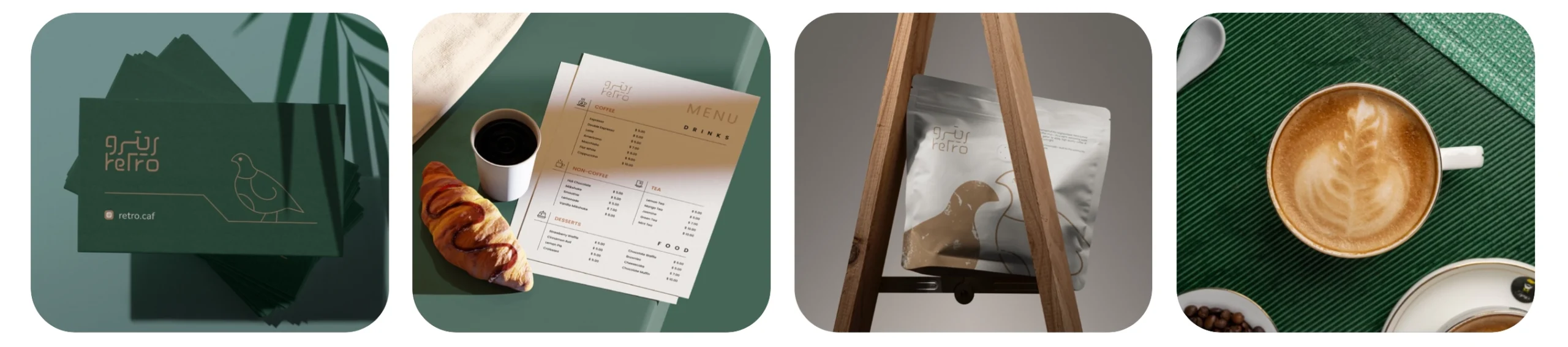
Signage introduces the brand before customers enter. Menus and service materials guide their experience. Cups, uniforms, and packaging create recognition throughout the visit, while digital communication extends the same atmosphere before and after it.
The identity never attempts to compete with the interior.
Instead, it connects the different details of the café and gives them a shared visual rhythm. Every touchpoint contributes to the feeling that Retro Café is one considered and coherent place.
This alignment between identity and environment turns the brand from something customers see into something they experience.
The identity does not sit inside the space.
It becomes part of how the space feels.
THE OUTCOME
A New Old Soul
Retro Café emerged with an identity that gives visible form to the feeling already present within its space.
The logo created a clear and memorable signature. The color palette and typography established a calm and recognizable presence, while the graphic language, photography, and applications translated the café’s character into a complete customer experience.
The new identity does not treat the past as a visual costume.
It draws from the warmth, authenticity, and emotional familiarity people associate with meaningful places—then expresses those qualities through a brand designed for today.
Retro Café can now communicate consistently across its space, products, packaging, and digital channels while preserving the personal character that makes the experience memorable.
A café shaped by quiet moments.
A brand made to stay in people’s memories.
